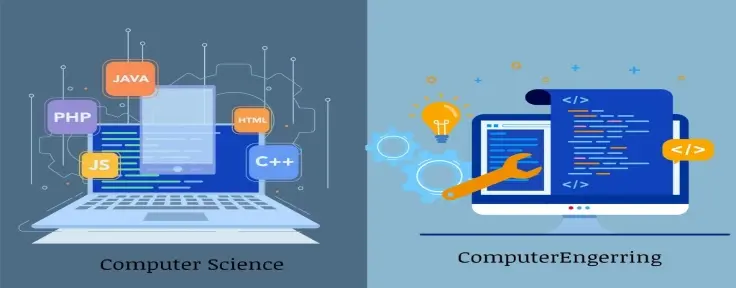
Choosing between computer engineering and computer science usually comes down to one simple question: do you prefer building the physical device, or do you want to write the code that brings it to life?
While both disciplines offer incredible employment prospects and excellent earning potential, your daily tasks will look entirely different depending on the path you choose. Here is a breakdown of what each field entails so you can make the best decision for your tech career.
Core Differences: Hardware vs. Software
Though the two fields frequently overlap in the real world, they have distinct academic and professional objectives.
Computer engineering is essentially a sub-discipline of electrical engineering. It focuses heavily on designing, building, and optimizing integrated electronic hardware systems. If you want to physically construct circuit boards, microchips, and connected devices, this is the field for you.
Computer science, on the other hand, is entirely centralized around computing theory, algorithms, and software design. While an engineer ensures the actual machine functions safely and efficiently, a computer scientist uses theoretical approaches to write complex code, build applications, and manage data sets that run on that machine.
Curriculum Overview
Because these fields have different end goals, their degree programs look quite different.
A computer engineering curriculum typically involves heavy hands-on lab work. You will take courses in electrical circuits, computer architecture, microprocessors, and system integration. You are learning how the physical components of a machine communicate.
A computer science degree leans heavily into mathematics and algorithmic theory. You will spend your time mastering programming languages, studying data structures, and learning the fundamentals of machine learning. The focus here is strictly on software alignment and optimizing code.
Essential Skill Sets
The skills required to succeed in these two roles are highly specialized:
-
Computer Engineers need strong foundations in physics and electrical engineering. They must understand hardware design, low-level programming (like Assembly or C), and how to troubleshoot physical systems.
-
Computer Scientists need a deep understanding of software engineering and theoretical computation. They must be fluent in high-level programming languages (like Python, Java, or C++) and possess the analytical skills required to structure massive databases.
Job Market and Career Outlook
Both fields offer exceptional job security as organizations continue to increase their reliance on digital infrastructure.
Computer engineers often take on roles as hardware engineers, systems architects, or network engineers. This sector is largely driven by advancements in telecommunications, aerospace, and the automotive industry.
Computer scientists typically become software developers, data scientists, or information security analysts. The demand here is massive, with the Bureau of Labor Statistics projecting a 15-17% job increase for software developers over the next decade.
(Note: Both fields are incredibly lucrative. According to the latest U.S. Bureau of Labor Statistics data, the median pay for computer hardware engineers sits around $155,000 per year, while software developers earn a median salary of roughly $133,000 per year.)
The Role of Innovation
Both disciplines are vital to technological progress, but they drive innovation in different ways. Computer engineers are currently leading the charge in robotics, automated hardware, and the Internet of things (IoT). They build the physical infrastructure that makes modern connectivity possible.
Conversely, computer scientists are pushing the boundaries of artificial intelligence (AI), predictive analytics, and machine learning. As new technologies like quantum computing and blockchain emerge, both hardware engineers and software developers will be required to work together to solve complex computational challenges.
Educational Pathways and Challenges
For both paths, a bachelor's degree is the standard entry requirement. However, the tech landscape evolves rapidly, which presents unique challenges for each profession.
Computer engineers must constantly adapt to swift shifts in manufacturing and hardware capabilities, which can complicate system reliability. Meanwhile, computer scientists face an endless cycle of learning as programming frameworks and software languages are continuously updated.
To stay competitive, gaining practical experience while you are still in school is critical. If you are leaning toward the software side, for example, reading up on what you'll really work on as an Amazon SDE intern can give you a massive advantage before you even enter the job market.
Ultimately, the choice between computer engineering and computer science depends entirely on your personal interests. Whether you want to build the machines of the future or write the code that powers them, both paths offer a secure, highly rewarding career.