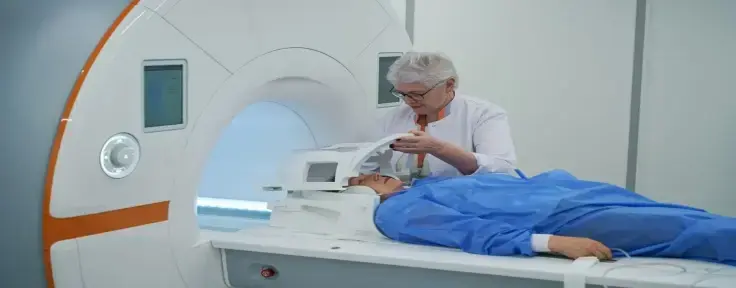
Building a long-term, rewarding career as an MRI technologist is about much more than just operating a scanner. With the right mix of clinical experience and continuing education, entry-level techs can easily move into advanced clinical practice or step up into department management. Earning a bachelor’s degree or securing specialized credentials—like the Magnetic Resonance Safety Officer (MRSO) certification—can open the door to lucrative supervisory roles.
Here is a practical guide to navigating the education, certification, and daily realities of a career in magnetic resonance imaging.
The Daily Reality of an MRI Technologist
MRI technologists are the clinical bridge between patients and life-saving diagnoses. On any given day, you will operate highly complex scanning equipment, properly position patients to capture the clearest possible images, and collaborate closely with radiologists.
Because these scans are essential for diagnosing everything from brain tumors to nervous system disorders, your ability to capture high-quality images directly impacts a patient's treatment plan. You will typically find MRI techs working on the frontlines of healthcare alongside nurses, doctors, and Patient Care Technicians (PCTs) in hospitals, busy outpatient imaging centers, and private physician practices.
Education and Choosing the Right Program
Your journey into this field starts in the classroom. Most professionals enter the workforce by earning an Associate Degree in Radiologic Technology, though many schools also offer dedicated MRI certificate tracks if you are already certified in another modality (like X-ray). If you want to fast-track your way into leadership or administration, pursuing a Bachelor’s Degree in Radiologic Sciences is a smart move that provides a deeper understanding of medical imaging.
Whatever path you take, ensure your program is fully accredited. Look for stamps of approval from recognized organizations like the ARRT, ARMRIT, JRCERT, or CAAHEP. A solid curriculum needs to cover human anatomy, patient care best practices, and the complex physics behind magnetic resonance imaging.
Gaining Real-World Clinical Experience
You cannot learn how to run an MRI machine purely from a textbook. Clinical rotations and externships are where you actually build the muscle memory to operate the equipment and manage patient anxiety. This hands-on experience under the supervision of seasoned professionals is incredibly valuable. To land the best clinical placements, treat your student interviews like real job interviews, show genuine enthusiasm, and leverage your program's existing relationships with local healthcare facilities.
Navigating Certification and State Licensing
Once you graduate, you need to prove your clinical competency. Most employers require credentials from either the American Registry of Radiologic Technologists (ARRT) or the American Registry of Magnetic Resonance Imaging Technologists (ARMRIT). Earning these credentials involves completing your accredited program, logging your required clinical hours, and passing a rigorous national board exam. Both organizations also have strict ethical standards you must adhere to.
Beyond national certification, most states require you to hold a state-specific license to practice. The process usually involves submitting your ARRT scores, passing a background check, and paying a licensing application fee. Keep in mind that medical imaging technology is constantly evolving, meaning you will need to complete continuing education (CE) credits regularly to keep your credentials active and stay up-to-date with industry innovations.
Essential Skills for the Job
Great MRI techs combine hard technical skills with serious interpersonal finesse. You need the technical aptitude to troubleshoot scanner issues and capture perfect images, but you also need the empathy and communication skills to calm claustrophobic or anxious patients. Since you will be on your feet moving patients and adjusting heavy equipment for most of your shift, physical stamina is just as important as a sharp eye for detail.
Job Search and Interview Strategies
When building your resume, make sure to highlight both your technical competencies and your bedside manner. Networking is your best friend here—attend healthcare career fairs, join professional imaging organizations, and build an active LinkedIn presence to uncover unlisted job openings.
During interviews, expect hiring managers to test your critical thinking. They will likely ask behavioral questions about how you handle equipment malfunctions or soothe panicked patients. Come prepared with specific examples from your clinical rotations that prove you can stay calm under pressure while maintaining a high standard of patient care.
Salary Expectations and Career Outlook
The financial and professional outlook for this field is incredibly strong. The median salary for an MRI technologist sits around $76,020 per year, though techs in high-cost-of-living areas or those with advanced certifications can earn significantly more.
Thanks to an aging population that requires more diagnostic imaging, the field is expected to grow by 6% between 2023 and 2033. Whether you eventually want to specialize in nuclear medicine, move into a CT scan role, or become a Radiology Department Manager, the opportunities for advancement in this high-demand field are practically limitless.